
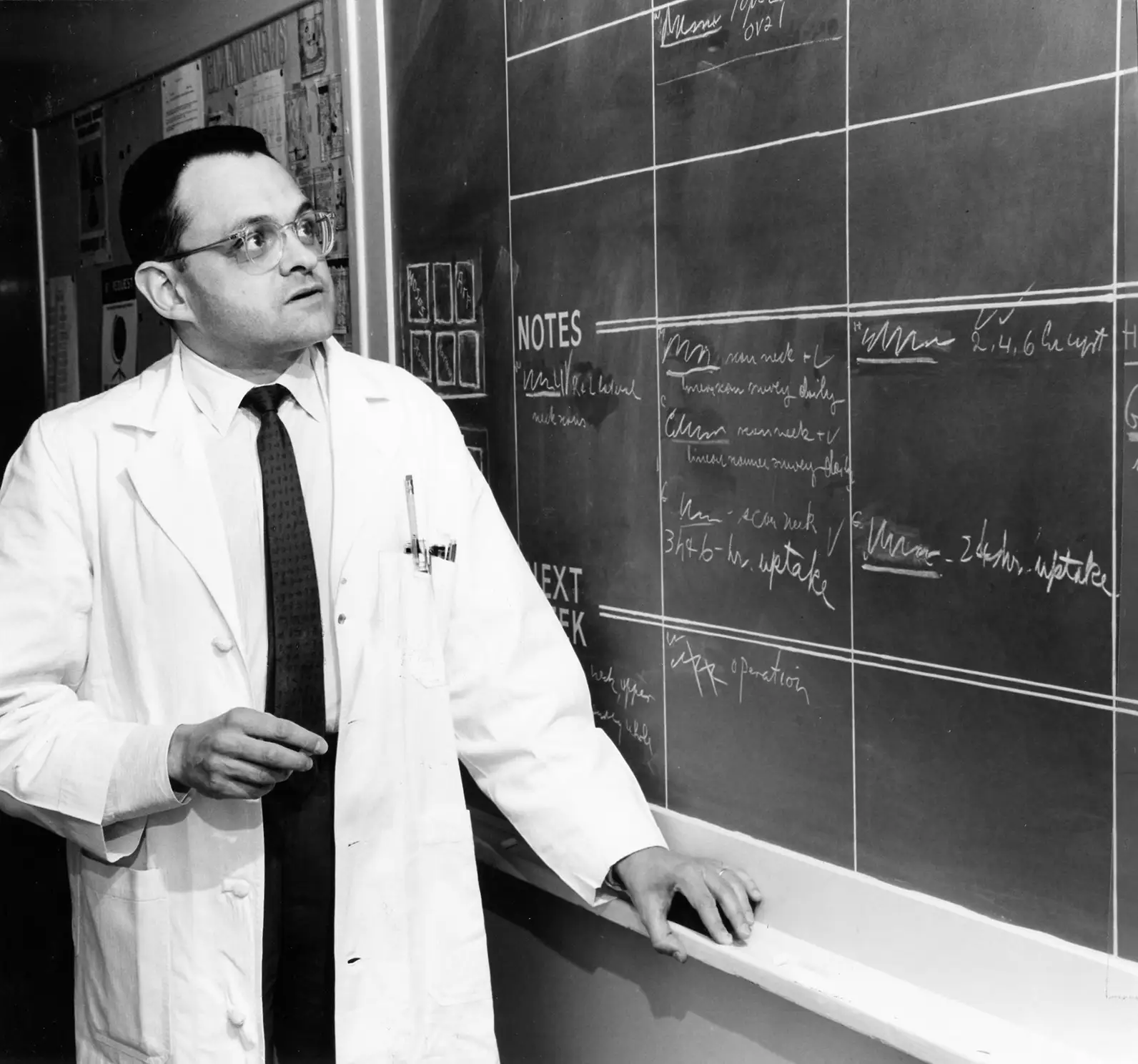
In researching Gould A. Andrews, M.D., the pioneering hematologist and second director of ORAU’s Medical Division, one description stood out. A 1970 feature in The Oak Ridger captured both the man and the physician: “In his sometimes-rumpled white coat, Dr. Gould Andrews goes busily about his duties as a doctor as well as a director. He is the picture of unflagging hope and of compassionate concern. Known by his friends and cohorts as ‘Andy,’ the small, stocky, dark-haired man hunches over a patient’s chart, his brows furrowed as he studies it.”
The article explored Andrews’ philosophy of medicine and posed a timeless question: “Is the oath of Hippocrates valid today?” For Andrews, the answer seemed evident in the way he approached both research and patient care.
A doctor drawn to Oak Ridge
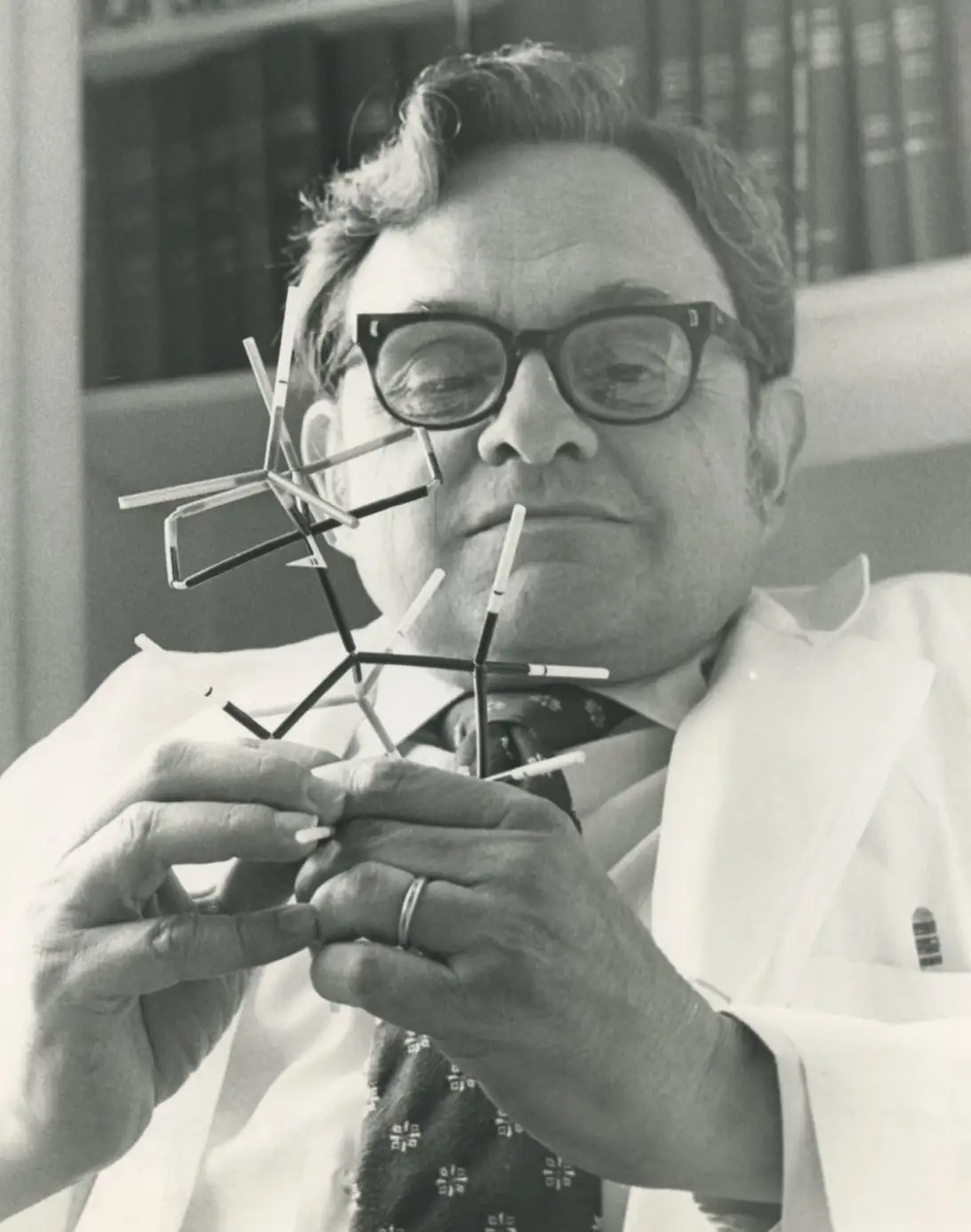
Dr. Gould Andrews spent 26 years at ORAU.
Originally from Grand Rapids, Michigan, Andrews came to Oak Ridge in 1949 while the ORINS (later renamed ORAU) Medical Division was still under construction. The Atomic Energy Commission had established the Medical Division as one of three national cancer research hospitals dedicated to advancing the medical use of radioisotopes.
The Y-12 criticality accident and a defining moment
As chief of clinical studies, Andrews practiced nuclear medicine in Oak Ridge at a pivotal moment in history -- the dawn of the Atomic Age. On June 16, 1958, the world’s first industrial nuclear criticality accident occurred just miles from the hospital when eight workers at the Y-12 National Security Complex were exposed to high levels of radiation. Andrews treated all eight men, all of whom recovered, and continued monitoring them for decades afterward.
His careful analysis of the incident helped define the biological and hematological effects of high-dose radiation exposure in humans and laid the groundwork for modern acute radiation exposure protocols. The experience deepened Andrews’ commitment to hematology and strengthened his expertise in predicting and treating the effects of accidental radiation exposure.
A reputation that reached beyond Oak Ridge
When Dr. Marshall Brucer retired in 1961, Andrews succeeded him as chairman of the ORINS Medical Division. Under his leadership, researchers advanced bone marrow transplantation studies for radiation injury treatment and developed early radiopharmaceuticals, including gallium-67 for soft tissue tumor imaging and carbon-11 amino acids for whole-body scans. Andrews also oversaw total body irradiation studies used in treating leukemia and lymphoma patients at the Oak Ridge Cancer Research Hospital.
ORINS became internationally recognized for its medical and radiological research programs. The groundbreaking work underway in Oak Ridge attracted visitors from home and abroad, including First Lady Elenor Roosevelt and even scientists and dignitaries eager to see the Medical Division firsthand.
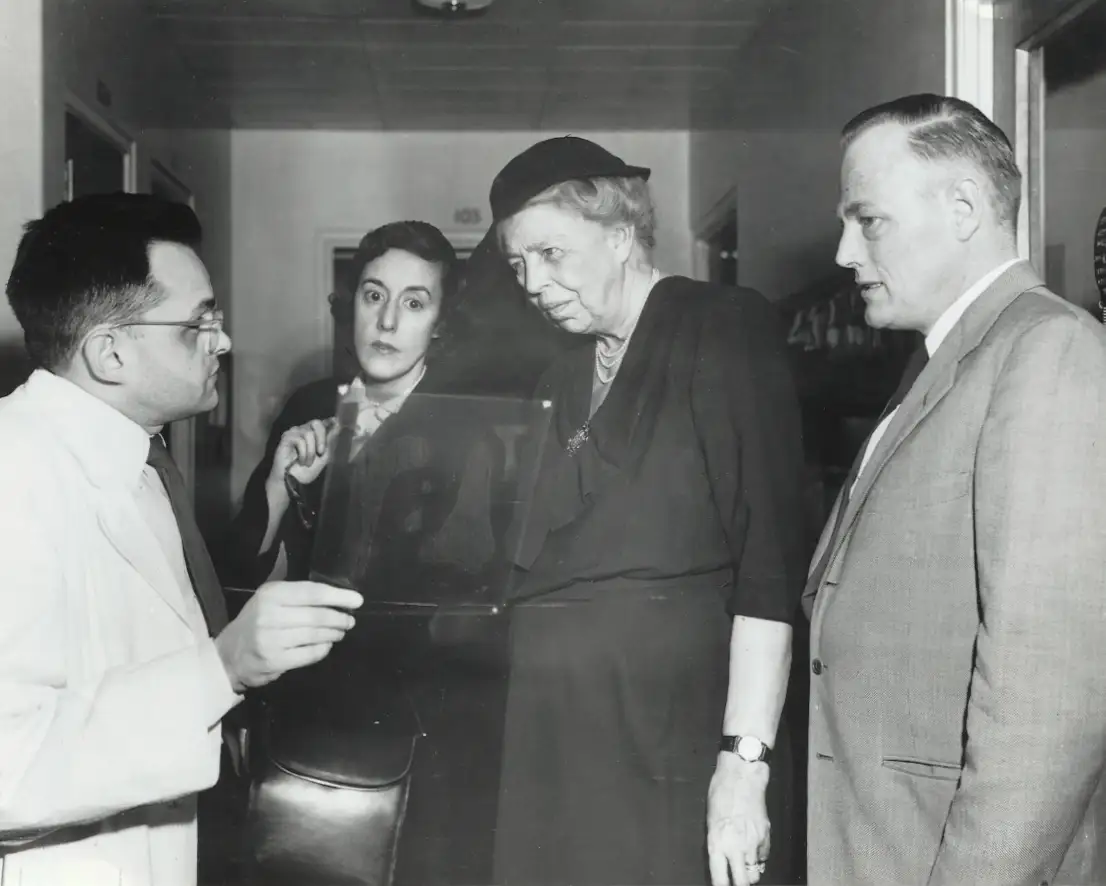
Dr. Gould Andrews (left) shows First Lady Eleanor Roosevelt (right center) around the ORINS Medical Division.
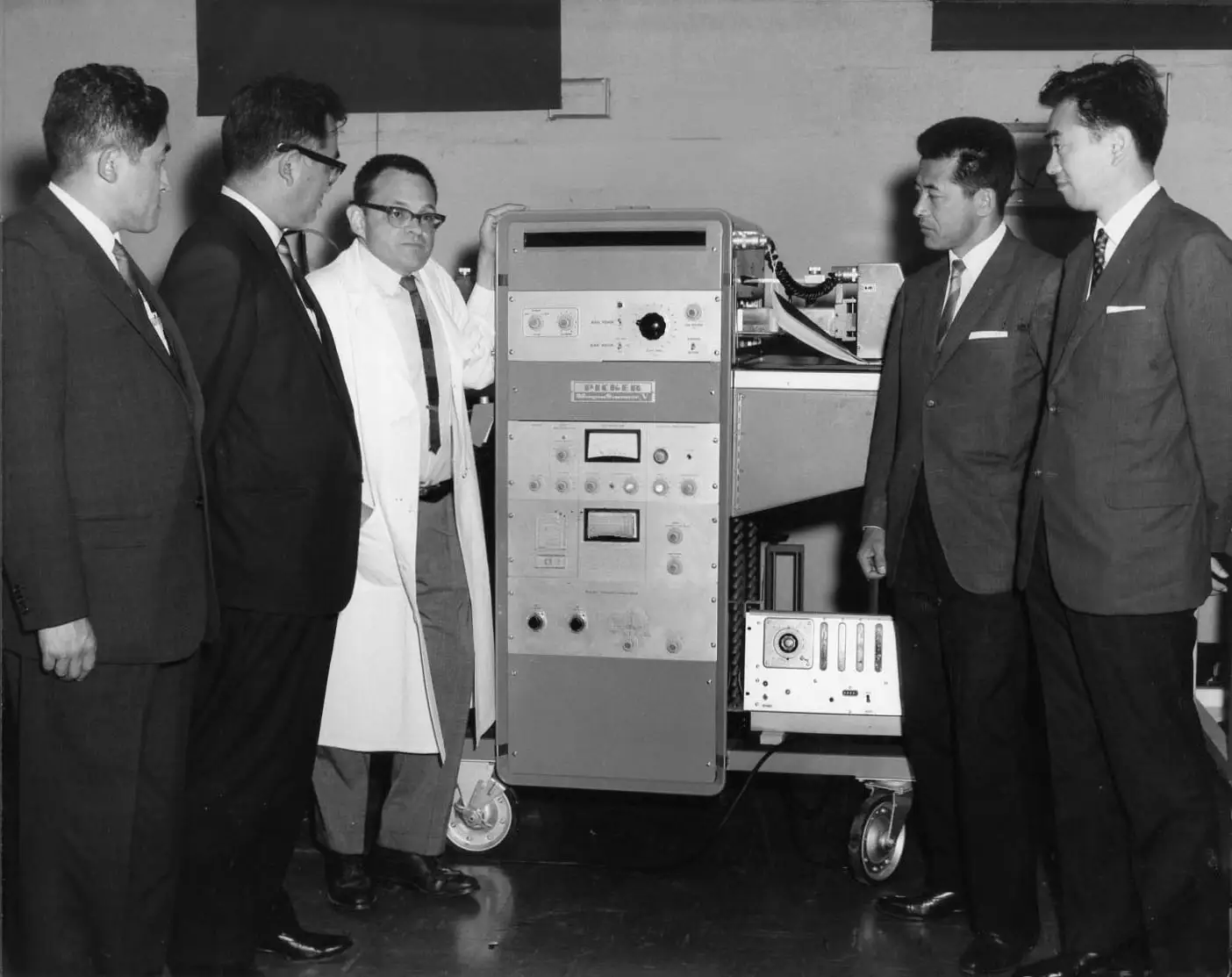
Dr. Gould Andrews demonstrates rectilinear scanner to Japanese visitors.
Andrews’ name became closely associated with the Medical Division, also referred to as the Oak Ridge Cancer Research Hospital, and the institution’s broader legacy. He later authored Chapter 11, detailing the Medical Division’s history, in From the Beginning, the book chronicling ORAU’s founding and early years.
Colleague Dr. Karl Hubner credited “Andy” with shaping the “truly clinical investigative program in nuclear medicine and radiation therapy” for which ORINS became known. Hubner wrote that Andrews was “extremely conscientious and always demonstrated deep concern for the patients involved in his research programs, never forgetting the human element. He appeared conservative but nevertheless he had a sense of and foresight for important new developments.”
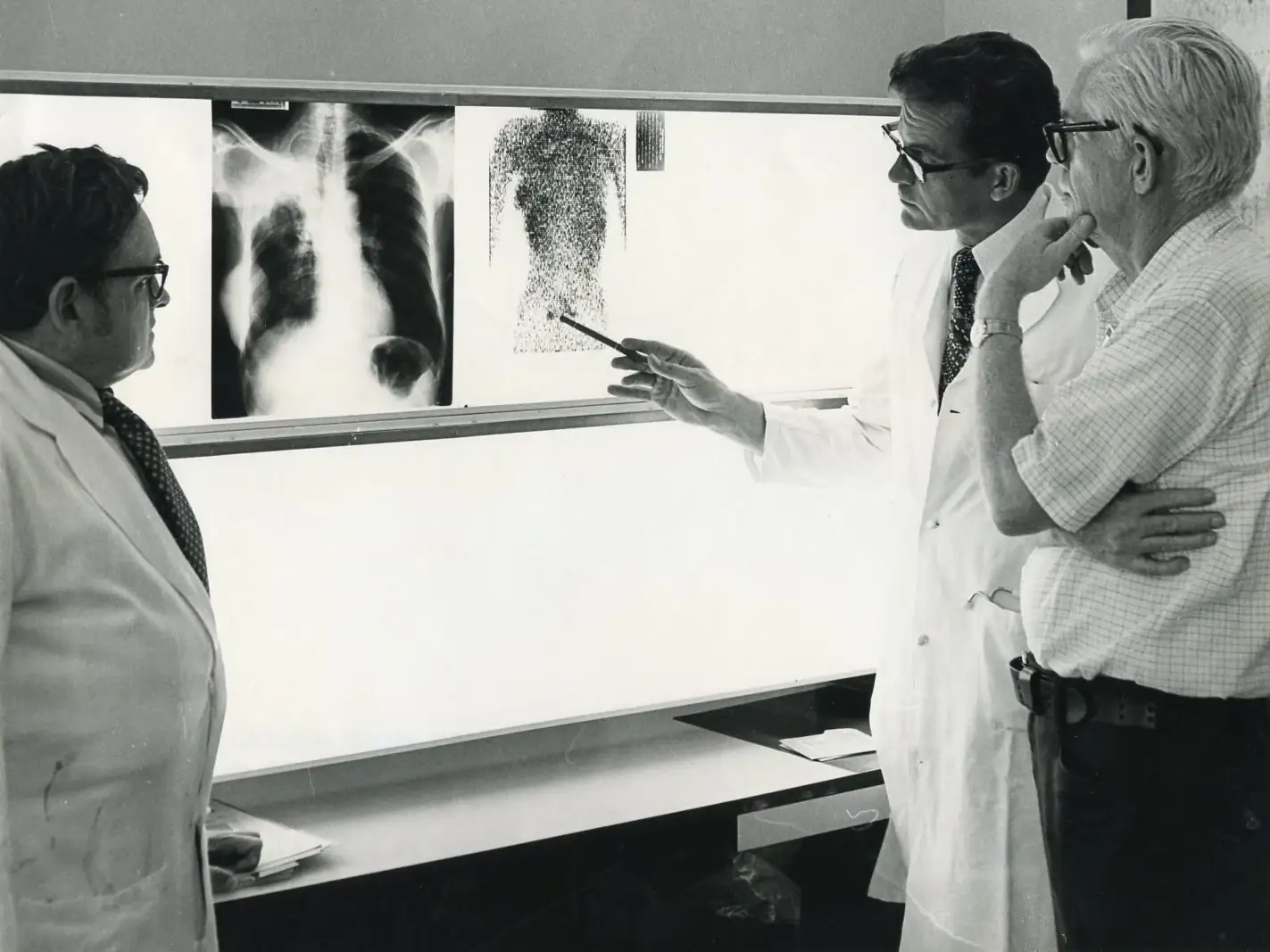
Dr. Gould Andrews (left) reviews scans with Dr. Karl Hubner (pointing to screen) and another colleague.
By 1974, the Oak Ridge Cancer Research Hospital had largely fulfilled its mission. Hospitals across the country had begun establishing their own nuclear medicine programs, prompting the Atomic Energy Commission to close the three specialized facilities it had created to explore radioisotopes in medicine.
After the inpatient clinical research facility closed, Dr. Andrews shifted his focus back to direct patient care and teaching. He joined the University of Maryland Hospital in Baltimore as a professor of medicine and radiology.
A legacy of science and humanity
Andrews died unexpectedly in 1980 at age 62, leaving colleagues and friends convinced he still had so much more to contribute. In a 1981 memorial published in the Journal of Nuclear Medicine, Hubner wrote that Andrews had served as both mentor and friend to many in the field. His scientific contributions included more than 100 journal articles and numerous nuclear medicine symposium proceedings that became widely known as the “Oak Ridge Symposia.” He also served on the Board of Trustees for the Society of Nuclear Medicine and on the editorial board of the Journal of Nuclear Medicine.
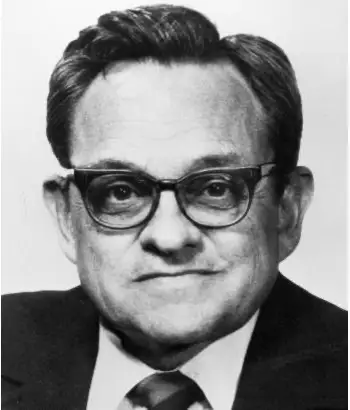
Dr. Gould Andrews was known for his compassion.
Hubner perhaps summarized Andrews’ legacy best when he described him as a “kind and gentle man to whom we owe so much.”
For ORAU, Andrews’ legacy – built across 26 years of service – extends far beyond scientific achievement. He helped establish Oak Ridge as a center for nuclear medicine research while insisting that compassion remain at the heart of innovation.
That commitment is reflected in the Hymn to Life mosaic that hangs in ORAU’s Pollard Center. Andrews and Dr. Ralph Kniseley, associate chairman of the Medical Division, originally envisioned the artwork for the entrance of the Oak Ridge Cancer Research Hospital. Funded through donations from grateful patients’ families and friends, the mosaic depicts a plant reaching toward a dove carrying an olive branch –a symbol of hope, healing and peace. Composed of thousands of one-inch ceramic tiles, the artwork became a lasting tribute to the hospital’s mission and the people it served. Years later, the weathered mosaic was carefully preserved, restored and reinstalled at ORAU’s main campus.
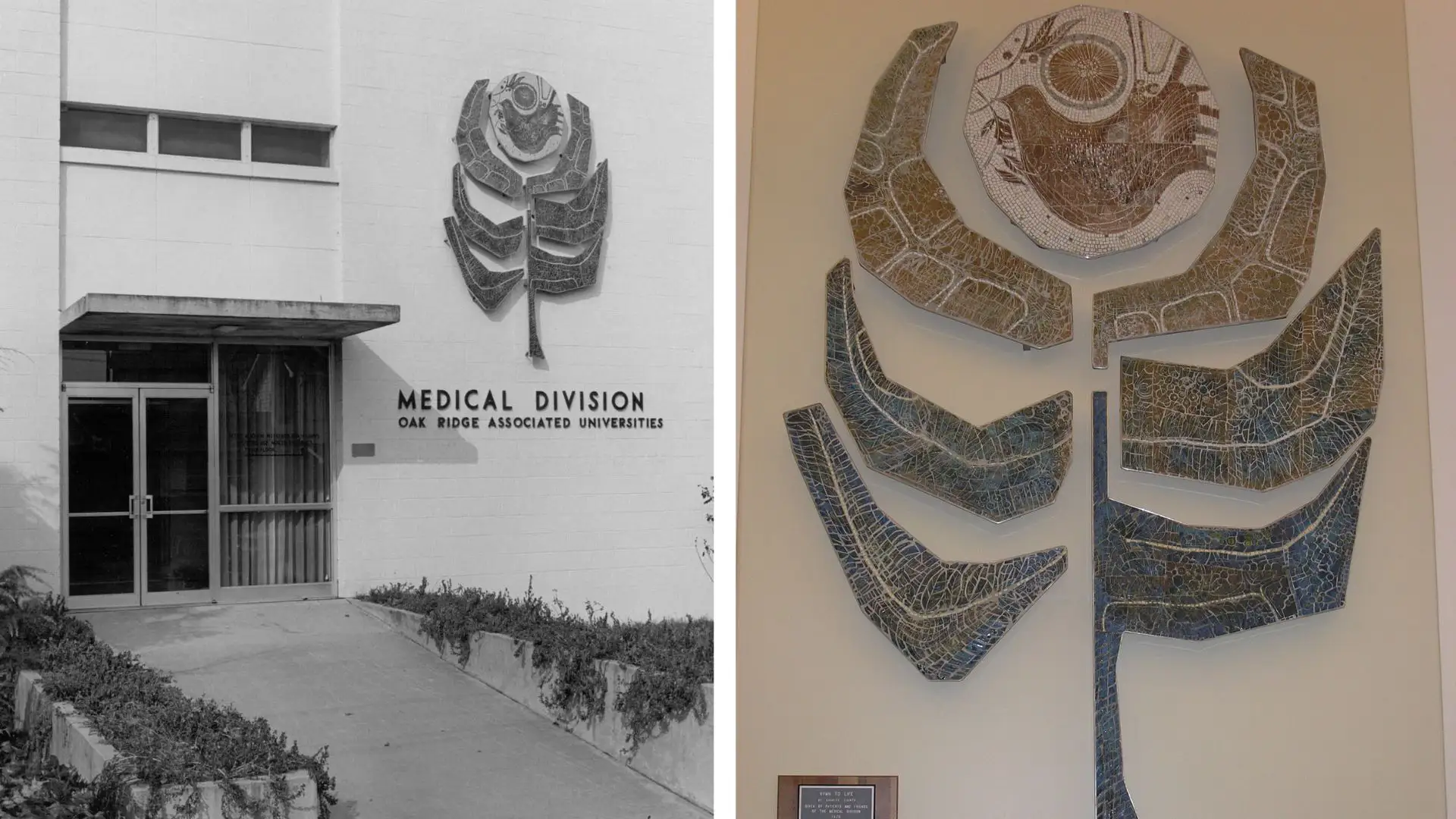
The Hymn to Life art installation is pictured next to the entrance of the ORAU Medical Division on the left, and a current picture of the artwork where it hangs in the Pollard Center is on the right.
In an era defined by rapid scientific advancement, Andrews never lost sight of the people behind the research – the patients whose lives depended on it. Like the 3,500 patients treated by the Medical Division during its 24 years of operation, Gould Andrews remains a part of the mosaic that defines ORAU’s enduring commitment to discovery, compassion and a better tomorrow.
Sources:
Is the Oath of Hippocrates Valid Today, article in The Oak Ridger (1970)
Historically Speaking: Memories — An early history of the Medical Division of ORINS/ORAU
In Memoriam article by Karl Hubner, published in the July 1981 Journal of Nuclear Medicine