
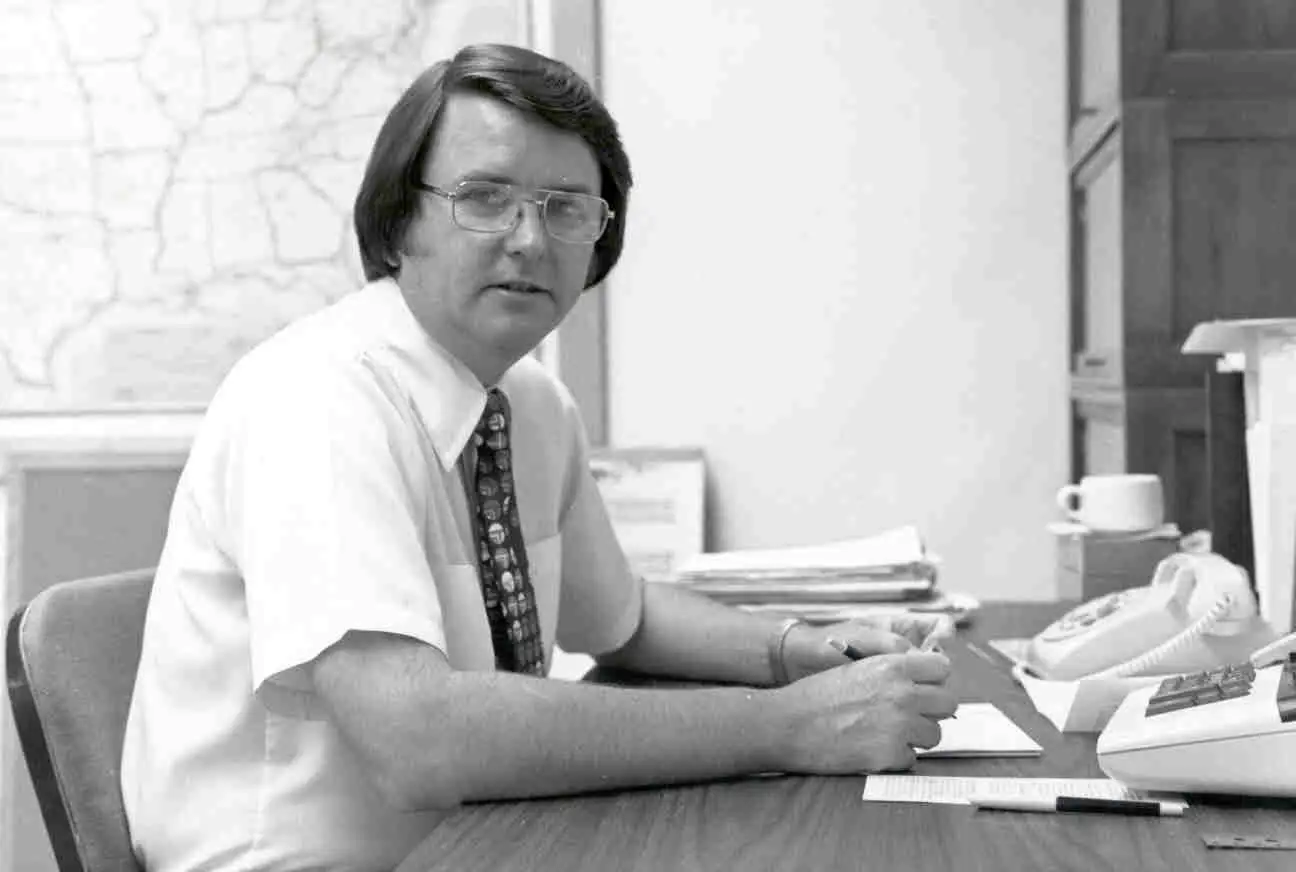
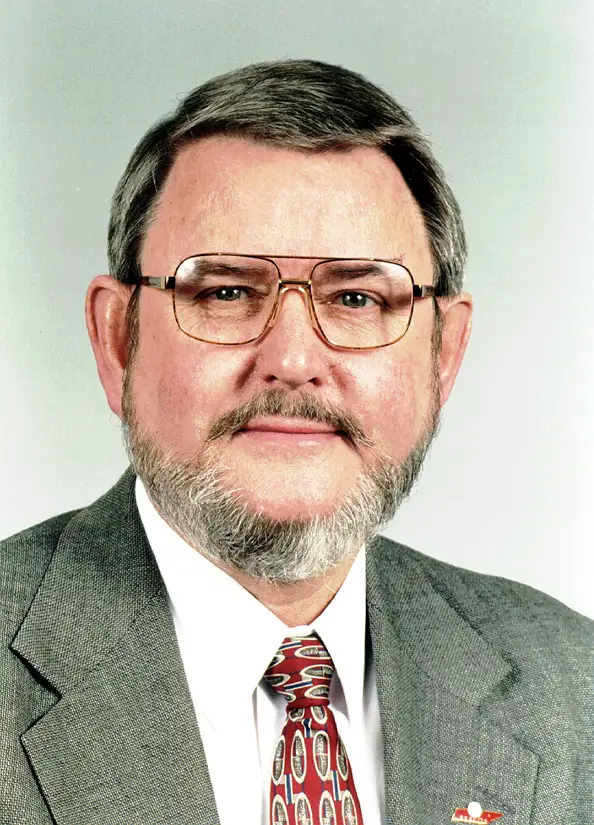
From research for NASA and the ORAU Medical Division to establishing the Radiation Emergency Assistance Center/Training Site, Bob Ricks’ long career served the science community well.
Born and raised in Port Arthur, Texas, Bob Ricks, Ph.D., built a remarkable career in science and technology—though he hadn’t always planned on it.
He earned both his master’s degree and doctorate in radiobiology from Texas A&M University after a high school teacher pushed him to test his potential.
“I didn’t really have any inkling that I would get a post graduate degree,” Ricks said during an oral history interview, “until one of my instructors, who read my personality quite well, angered me a little by saying that, well, I didn’t need to think about going to college and all that because he didn’t think that I would be that good of college student. I took that as a challenge,” Ricks added with a laugh.
That challenge would change the course of his life.
A Texas researcher heads to the mountains
So how did this proud Texan—who loves spicy food and grew up along the swampy Gulf Coast—find his way to East Tennessee?
While in graduate school, Ricks studied the effects of radiation on pregnant rats, an uncommon line of research in the 1960s. His work caught the attention of researchers in Oak Ridge, who invited him to join Oak Ridge Associated Universities (previously called Oak Ridge Institute of Nuclear Studies) as a summer intern in 1967.
Out of 26 applicants, Ricks was selected for a single position in the Medical Division.
“Only because I had this experience in the effects of radiation on animal life, I got accepted and had a three-month appointment here in Oak Ridge,” he explained.
His first impression of the region?
“There are things besides the swampy Gulf coast” he remembered thinking. The mountains were especially striking—terrain he believed he had seen only once before.
His three months came and went, and as much as he enjoyed the work and the scenery, Ricks assumed he would never return. But when a couple of summers later Ricks was looking for another short-term position, he reached back out to ORAU.
The deadline had passed.
“I did something that was not like my upbringing,” Ricks smiled. “I told the physician that I had worked with, ‘Why don’t you push some buttons for me and get me in to continue the research I had done at ORAU two years before?’”
Two weeks later, he received an acceptance letter for the summer 1969 research program.
The timing couldn’t have been better.
Science in the Space Race era
In 1969, the Apollo program was at its height, and the United States was poised to send astronauts to the moon. It was during this second summer with ORAU that Ricks met Clarence Lushbaugh, M.D., who held a NASA grant to study the effects of radiation on astronauts.
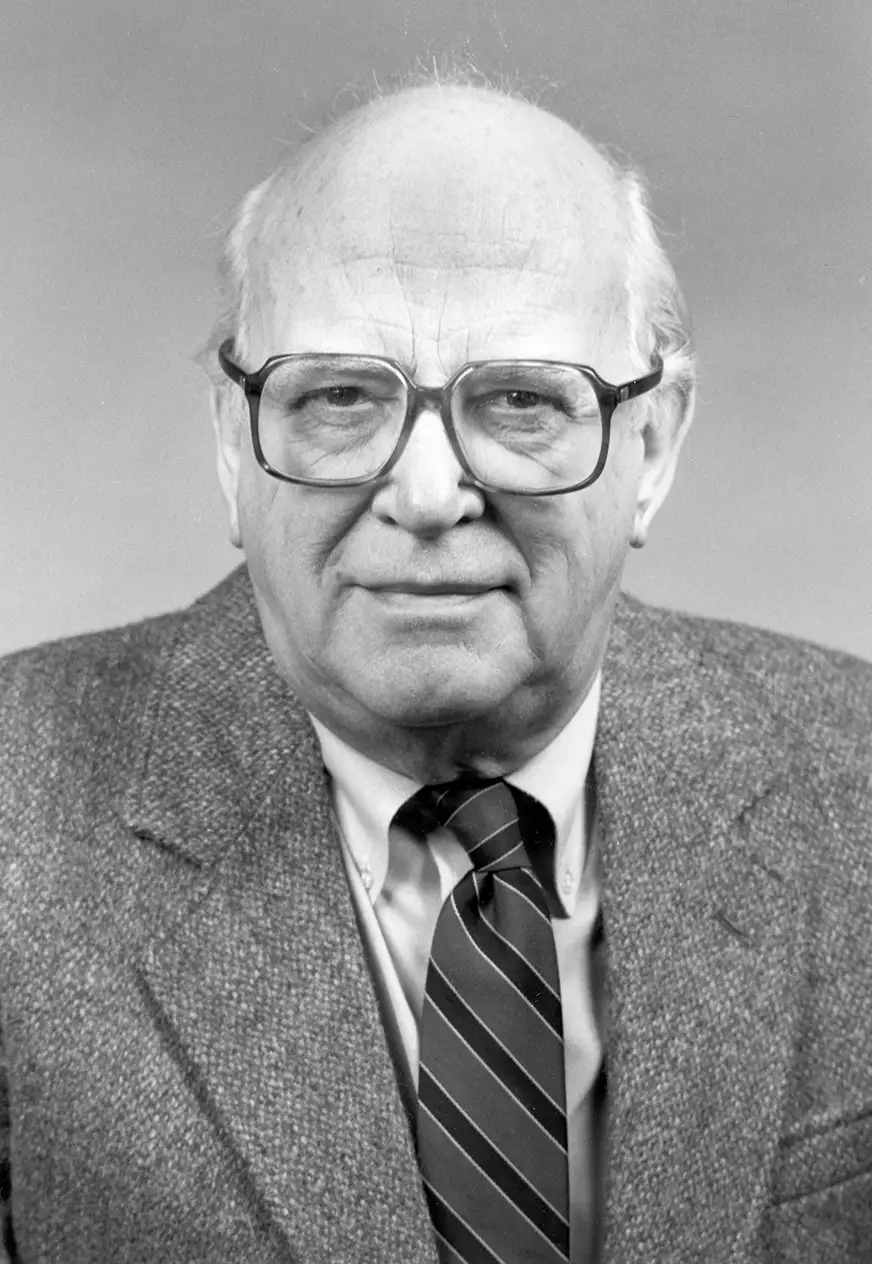
In 1969, Clarence Lushbaugh, M.D., conducted research for NASA studying the effects of radiation on astronauts.
NASA was particularly concerned about “trapped radiation,” which refers to charged particles caught in Earth’s magnetic field that form the Van Allen radiation belts. Exposure posed a serious hazard to astronauts traveling through space, potentially causing nausea, incapacitation and other dangerous symptoms.
At the time, ORAU’s Medical Division was the only facility in the United States that offering total-body radiation therapy for certain types of leukemia. Some patients in the early stages of disease volunteered to allow Ricks to measure the effects of their treatment.
Working with the head of the computer science program, Ricks helped develop a system to measure the incapacitating effects of whole-body radiation—specifically the onset and severity of radiation-induced nausea and vomiting.
“Everybody goes through the same pattern. You just have to measure it,” Ricks explained. “You can then say at a certain point in time, the individual has five minutes before they become incapacitated and vomit. And, of course, they’re all in breathing gear on the spacecraft, and you don’t want your astronauts vomiting into their breathing gear.”
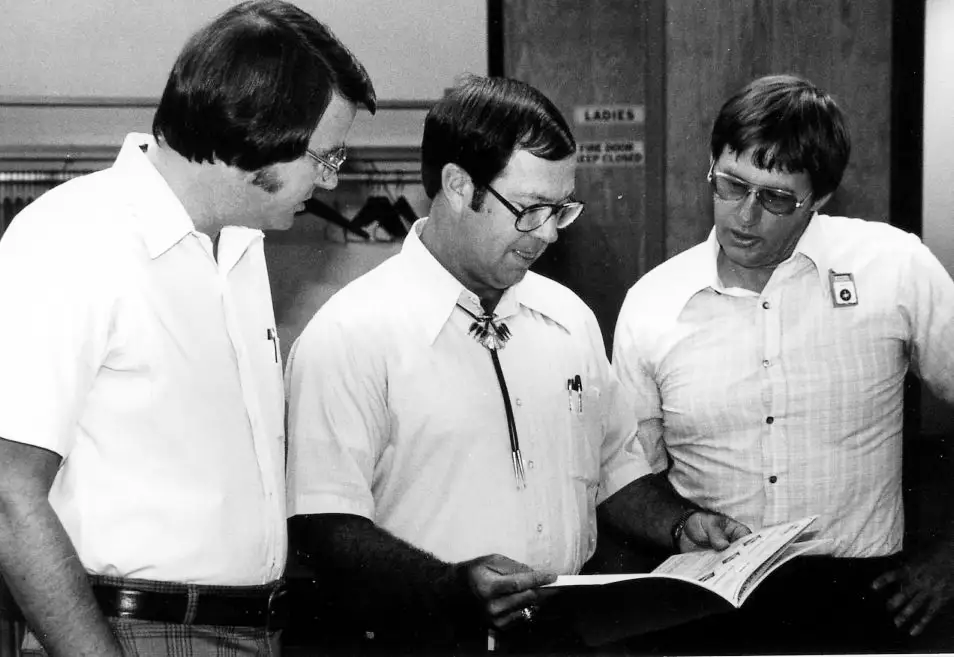
Left to right: Bob Ricks talking with colleagues Jack Beck and Jim Berger.
The system was based on changes in respiratory patterns.
“If you think about how your breathing changes when you are nauseated… you begin to take deep breaths. And as you get nearer to the vomiting episode, you change your breathing pattern to even deeper breaths.”
NASA used this knowledge to monitor astronauts’ breathing patterns aboard spacecraft.
But for Ricks, the most meaningful part of the research was not the technological breakthrough—it was the patients.
“They were very, very cooperative,” he emphasized. “No one participated unless they volunteered. They felt like they were making a contribution to science.”
Their willingness to help advanced both space exploration and medical science.
The research proved so impactful that Ricks’ summer appointment was extended for a year, followed by additional NASA-funded studies. Eventually, however, NASA concluded it had gathered the information it needed. It was at this point that the ORAU Medical Division had also achieved its research goals and was closing its doors as well.
Since the Medical Division was what Ricks had called his home away from home, it seemed Ricks’ time in Oak Ridge had finally come to an end.
A defining decision
“I was all set to leave Oak Ridge,” Ricks recalled. “I had a job offer to work in Los Alamos.”
But Dr. Lushbaugh had another idea. Rather than dispersing the highly trained staff from the Medical Division, he envisioned a new program dedicated to studying radiation’s biological effects and training medical professionals to respond to radiation accidents.
Ricks had a choice to make.
“I made a decision—the best decision I’ve ever made in my life—not to go to New Mexico but to stay on here in Oak Ridge to work in REAC/TS.”
After the Medical Division closed in 1974, ORAU established the Radiation Emergency Assistance Center Training Site (REAC/TS). It officially opened in 1976. The federal government agreed that maintaining expertise in radiation medicine was essential. REAC/TS became a 24/7 deployable asset for the Department of Energy, capable of responding to radiation incidents anywhere in the world.
Ricks helped build the program from the ground up. In 1981, he became director.
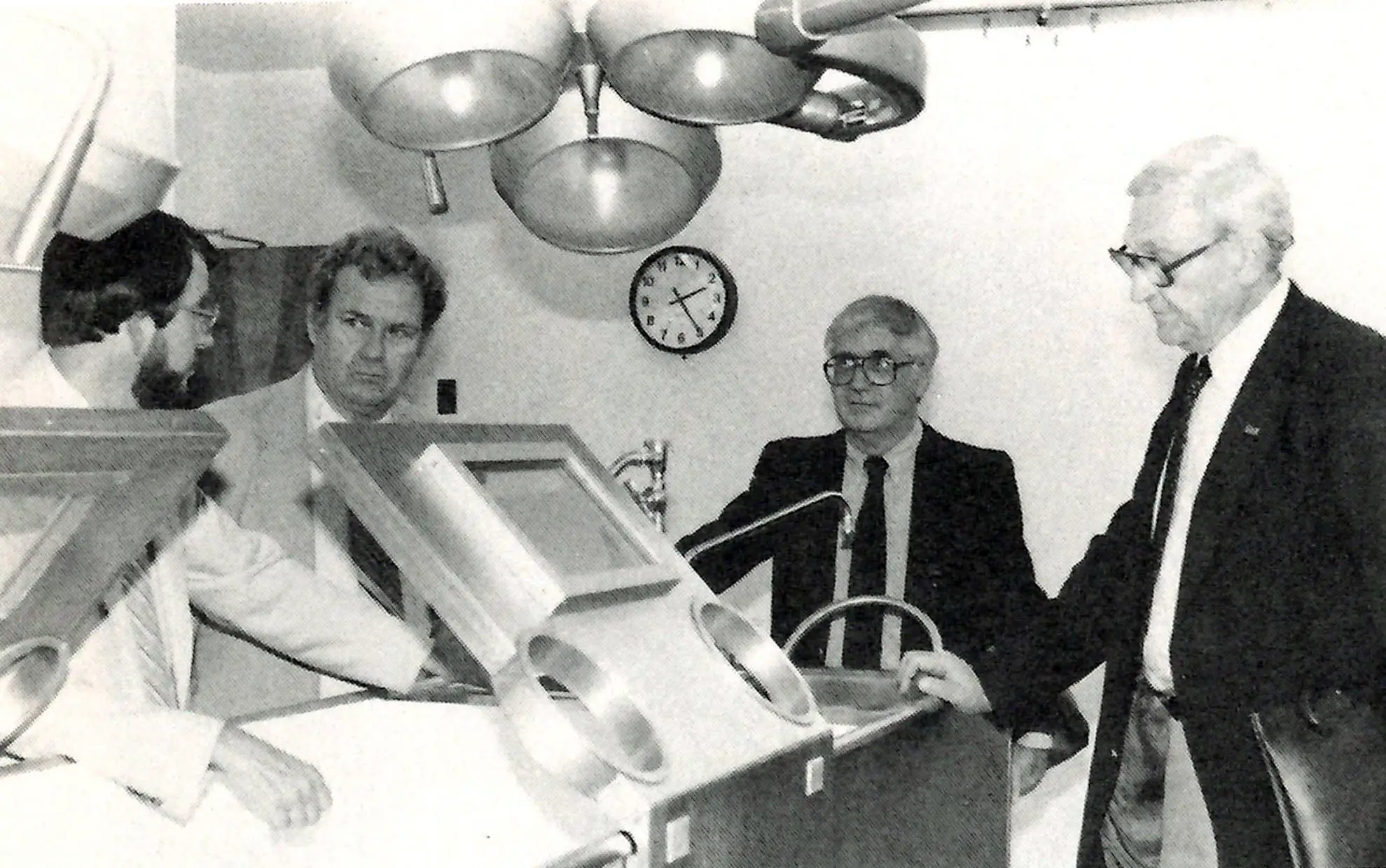
Bob Ricks (far left) leads REAC/TS tour in 1985.
“The program caught on very quickly,” he remembered. Training expanded from one or two courses a year to more than a dozen. With a small team of eight or nine staff members, REAC/TS grew into a nationally—and soon internationally—recognized center of excellence.
At the time, only two facilities in the world offered comparable radiation training and emergency medical assistance—one in France and one in the Soviet Union.
Under Ricks’ leadership, REAC/TS combined hands-on emergency response with professional training in a way that was both rare and essential. The model remains critical to radiation medicine today.
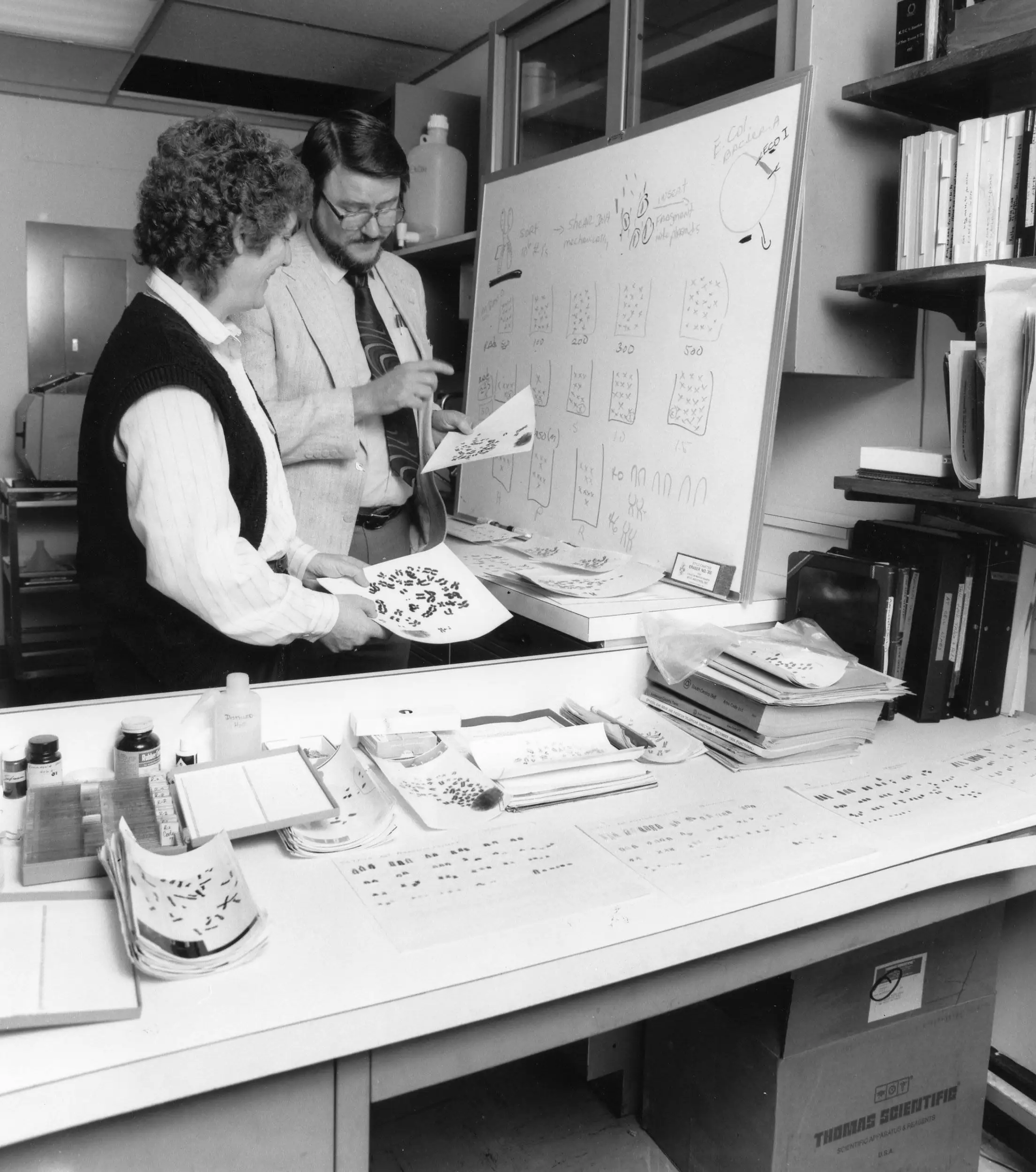
Bob Ricks with co-worker Gail Littlefield discussing REAC/TS’ cytogenetics program in the mid-1980s.
A global impact
Ricks served as director of REAC/TS until his retirement in 2004. In 23 years, he led assistance missions in 46 countries and provided what the Health Physics Society described as “considerable assistance” to the International Atomic Energy Agency and the United Nations Scientific Committee on the Effects of Atomic Radiation in Vienna.
The 1980s proved to be a pivotal decade in advancing global understanding of radiation contamination and emergency response. During that time, Ricks led the REAC/TS team in several major international incidents—four of which stand as defining milestones in his legacy of leadership.
Juarez, Mexico (1984)
After sitting in storage for years because no one was trained to operate it, a radiation therapy unit at a medical center was sold for scrap.
An employee unknowingly disassembled the machine, puncturing its source container and scattering approximately 6,000 cobalt-60 pellets. Each pellet carried a dangerous—potentially lethal—amount of radioactive material capable of causing severe radiation sickness, permanent injury or death.
For two months, the pellets were dispersed throughout a junkyard by an electromagnetic crane and shipped in scrap loads to different foundries. Most of the scrap was processed into steel and used to make rebar, metal table bases and electric motor parts.
The accident was discovered by chance when a truck carrying contaminated rebar got lost more than 370 miles from Juarez and stopped at the Los Alamos National Laboratory in New Mexico to ask for directions. A radiation detector at the facility gate immediately alarmed. Within days, Ricks and his team were on the ground, investigating and advising authorities on containment and public safety. Remarkably, no deaths were attributed to this incident.
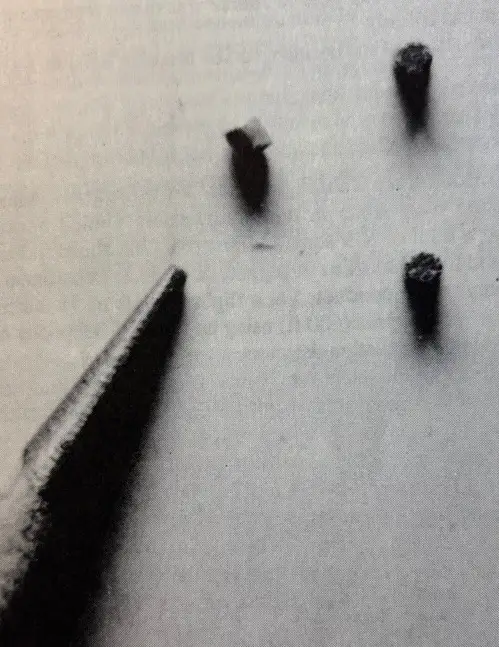
Figure 2, Page 15, The Medical Basis for Radiation Accident Preparedness II, image shows pellets similar to what was retrieved from the cobalt-60 machine.
Chernobyl, Ukraine (1986)
During a safety test at the Chernobyl nuclear power plant, operators made critical errors that triggered a sudden power surge, explosions and a massive graphite fire. Large quantities of radioactive material were released into the atmosphere, contaminating vast areas of Ukraine, Belarus and Europe.
Two workers died immediately; dozens of firefighters and plant personnel later succumbed to acute radiation sickness. Although Soviet authorities initially attempted to conceal the disaster, REAC/TS played an important international medical advisory role. The team provided expert consultation to U.S. agencies and global partners on radiation dose assessment, management of acute radiation syndrome, long-term health monitoring and analysis of clinical data from exposed workers.
Goiania, Brazil (1987)
In an incident hauntingly similar to what happened in Juarez, two scrap metal scavengers entered an abandoned medical clinic and dismantled a radiotherapy unit containing highly radioactive cesium-137. Unaware of the danger, they transported the device by wheelbarrow to their housing development.
That night, one of the men was captivated by the striking blue glow from the capsule of the device, and he took it to his living room “to be exhibited to his relatives, neighbors, friends and onlookers.” The contamination spread widely before anyone understood the threat.
When patients began arriving at the local hospital with unexplained radiation symptoms days later, Brazilian authorities identified the source and contacted REAC/TS. Ricks and his team provided guidance on patient assessment, dose estimation, medical management, and long-term follow-up, while also helping coordinate the broader clinical response.
More than 125 people were found to be contaminated. Twenty required hospitalization; 17 suffered bone marrow depression. Four people—including a 6-year-old girl—died from acute radiation syndrome.
San Salvador, El Salvador (1989)
At an industrial irradiation facility in San Salvador, products were sterilized using a radioactive cobalt-60 source mounted on a movable rack. When the device became stuck in the exposed position outside its protective shielding, a worker bypassed the safety system. He and two colleagues entered the radiation room in an attempt to free the mechanism manually.
Untrained in the hazards of ionizing radiation, the three men received extremely high whole-body and localized doses. All developed severe acute radiation syndrome and extensive radiation burns. One man died; the others suffered life-altering injuries, including amputations and chronic medical complications.
REAC/TS provided specialized medical consultation and direct clinical support. The team evaluated the patients and facilitated their transfer to an advanced treatment facility, helping guide their complex care.
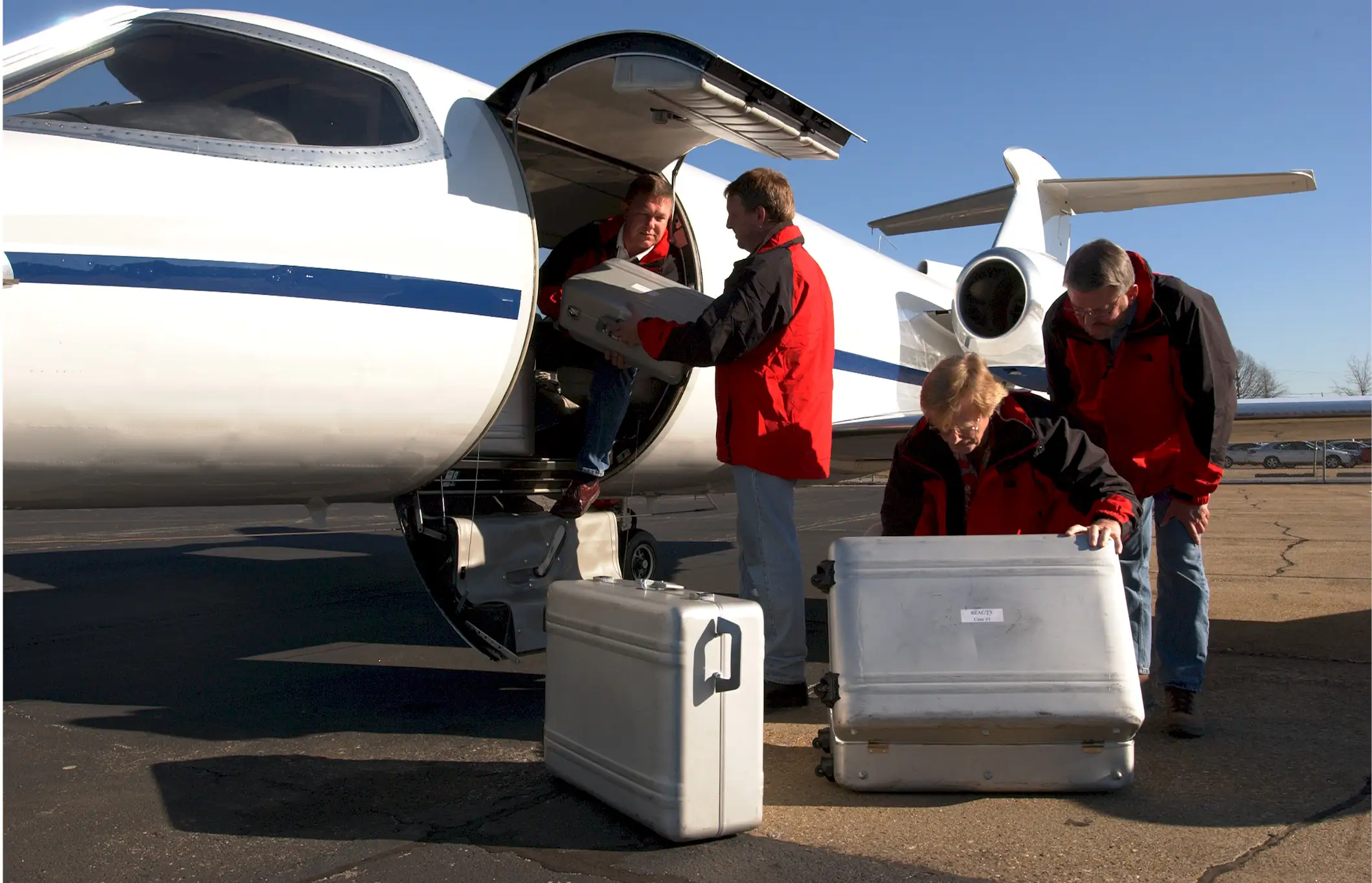
Bob Ricks (far right) prepares to travel with REAC/TS for a radiation response training course in 2002.
Gratitude from the swamplands
Looking back, Ricks marveled at his career.
“I felt a lot of gratitude toward Lushbaugh because he allowed me to stay here and be the day-to-day manager of REAC/TS,” he said. “I jumped on that very quickly, still not knowing the magnitude of the benefit that would bring to me… this young guy from the swamplands and Texas coast ended up traveling all over the world and meeting all these wonderful people.”
Ricks passed away in 2017 when he was 76 years old.
From a high school challenge to global leadership in radiation emergency medicine, Bob Ricks’ journey was shaped by curiosity, courage and a willingness to seize opportunity.
Oak Ridge—and the world—are better for it.
Sources:
Ricks, Robert (Bob) - COROH - ORPL Digital Collections
In Memoriam: Robert C. Ricks - HPS
Information about the radiation contamination incidents in Juarez, Chernobyl and Goiania was found in a book edited by Bob Ricks and Shirley Fry, The Medical Basis for Radiation Accident Preparedness II Clinical Experience and Follow-Up since 1979
Information about the radiation contamination incident in San Salvador was found in a book edited by Bob Ricks, Mary Ellen Berger and Frederick O’Hara, Jr., The Medical Basis for Radiation-Accident Preparedness III The Psychological Perspective