
In the 2015 sci-fi movie, The Martian, astronaut Mark Watney, played by Matt Damon, is inadvertently left behind when his fellow crew members abort a manned mission to Mars during a dust storm. In his effort to survive until he can be rescued, Watney grows potatoes using the crew’s biowaste and Martian soil.
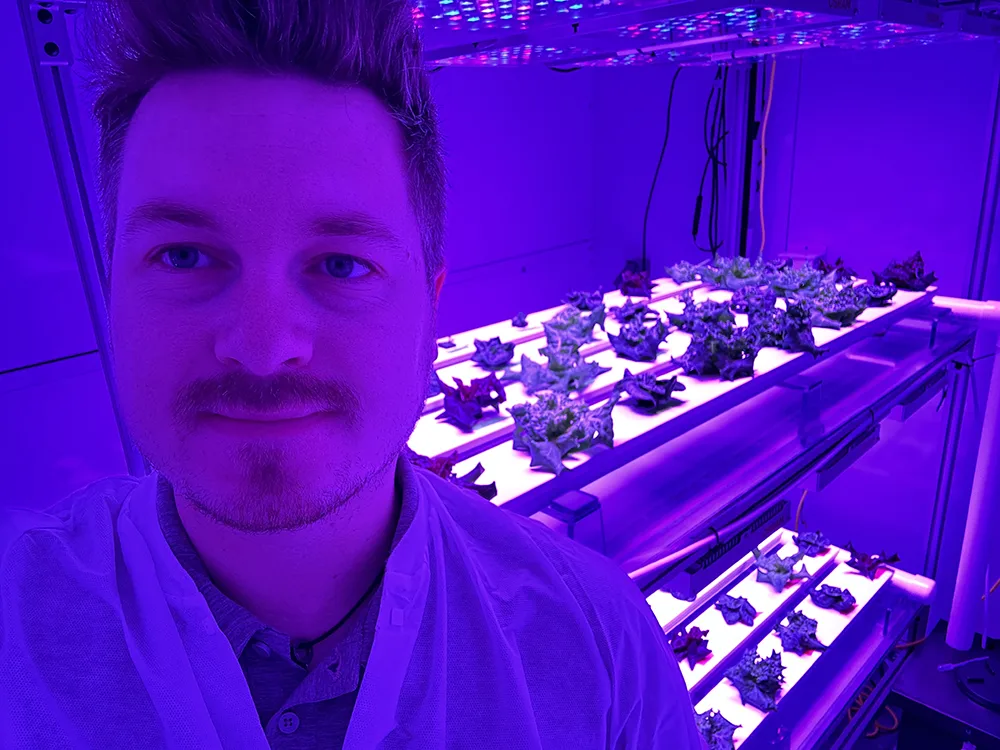
While the movie was fiction, for Luke Fountain, Ph.D., a third-year NASA Postdoctoral (NPP) Fellow, determining how astronauts can best grow food in space is a very real problem to be solved. Fountain is based at Kennedy Space Center in Cape Canaveral, Fla., through the NPP fellowship program that ORAU manages, and he is part of the space crop production team there.
“The whole point of us doing all of this [research] is because we want to grow crops in space, and we want astronauts, particularly on future deep space missions, to be able to support themselves and be less reliant on resupply from Earth,” Fountain said on an episode of Further Together, the ORAU Podcast.
Fountain’s research focus is on nitrogen uptake, which is a critical component of plant growth. Understanding, in a space flight environment, how plants uptake nitrogen, which is contained in human biowaste and other sources, could lead to the development of waste recycling processes for crop production and allow astronauts to control how nitrogen is distributed to crops.
He added that astronauts understand how to grow plants on the International Space Station, but growing plants on the Moon or Mars has a wide set of variables.
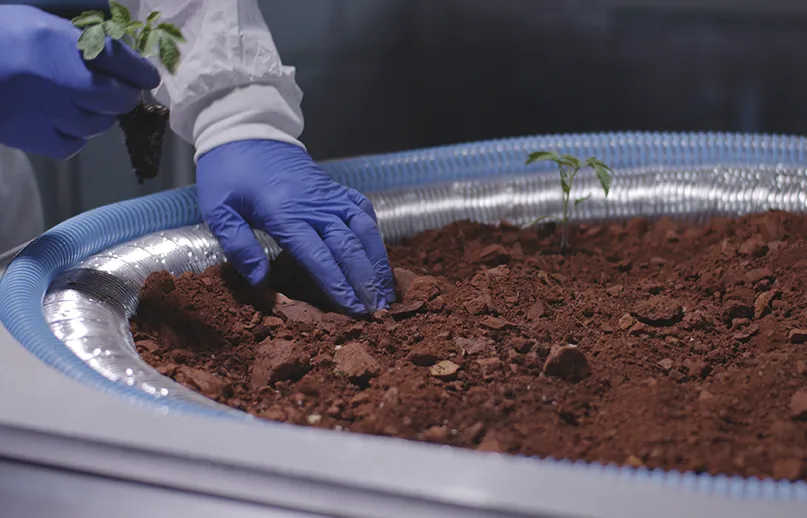
Nitrogen uptake is a critical component of plant growth. Getty stock image
These variables are part of a nine-point framework, called the Bioregenerative Life Support System (BLSS) Readiness Level, designed to assist scientists and manned space flight crew members in overcoming challenges to establish resilient, sustainable crop production in space. The framework was included in a paper, which Fountain co-authored, and was published in the New Phytologist in November 2025.
The BLSS Readiness Level priorities are drawn from the International Space Life Sciences Working Group (ISLSWG) Plants for Space Exploration and Earth Applications workshop, held at the European Low Gravity Research Association (ELGRA) conference in Liverpool, England, in September 2024.
“The idea really was to bring the international space plant biology community together,” Fountain said. “It had been a long time since all of us had come together in the same room to discuss the developments and advancements we’ve made over the last several years.”
Taco Tuesday in space?
While astronauts have been growing plants on the International Space Station for years, the most famous example occurred in 2021. The Plant Habitat-04 Experiment (PH-04) involved growing chili peppers in a small, controlled chamber to see if they could be grown as a viable food source.
“The astronauts got to eat chili peppers on the space station. They made space tacos, and it was all over the media,” Fountain said. “It was amazing. It was before my time at NASA, but they really got excited about it.”
Plants and psychological well-being
In addition to cultivating plants to grow food for astronauts, there is another reason growing plants in space is important.
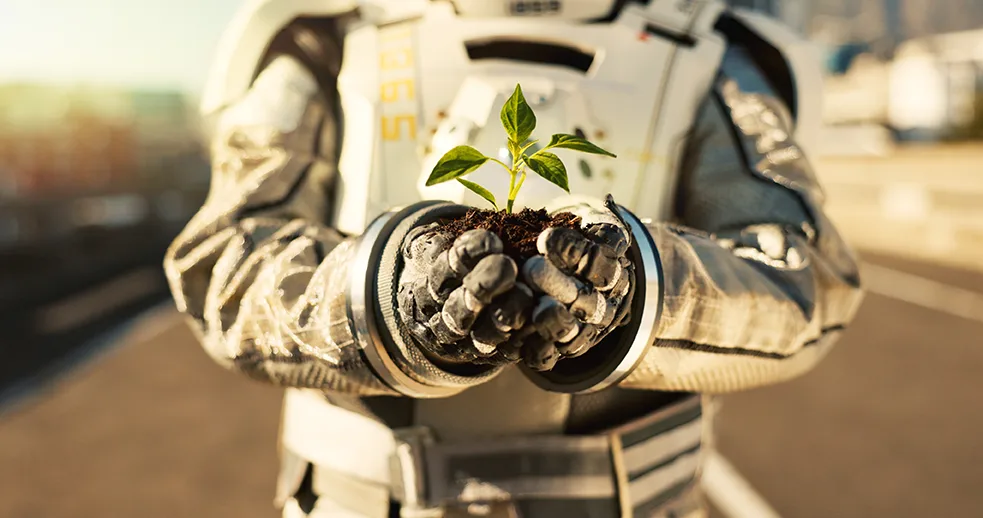
Growing crops in space has multiple benefits for astronauts. Getty stock image
“It’s for the psychological well-being of the astronauts,” Fountain said. Plants have a mental health benefit, but astronauts don’t have the ability to go for a hike in the woods or walk in a park. Growing plants in space has similar benefits.
“We’ve made a lot of advances in that area,” Fountain said.
Ohalo III and the ISS
Fountain is excited to be working alongside scientists who are part of Ohalo III, a prototype crop production system intended to be deployed to the ISS in August 2026. Ohalo III will inform design decisions for future crop production systems for deep space missions, including how to deliver water effectively and optimize the volume of crops grown. The system is currently being tested at Kennedy Space Center.
“The real goal is less on research and more on how we turn this into something astronauts operationally can use to support future missions,” he said. “It’s going to be a lot of astronauts growing food that they want to grow, us validating systems, of course, but astronauts growing food that they want to grow from start to finish and doing it repeatedly.”
Fountain said the Ohalo III system will help determine how much crew time is involved in growing crops, what kind of consumables might be needed because resupply from Earth is difficult, and any pitfalls that might need to be addressed before deployment to deep space.
Getting to Mars and beyond will take a greater understanding of how to feed crew members without relying on resupply from Earth. Fountain and other researchers are working out how to make that happen.