ORAU-Directed Research and Development Project Summaries

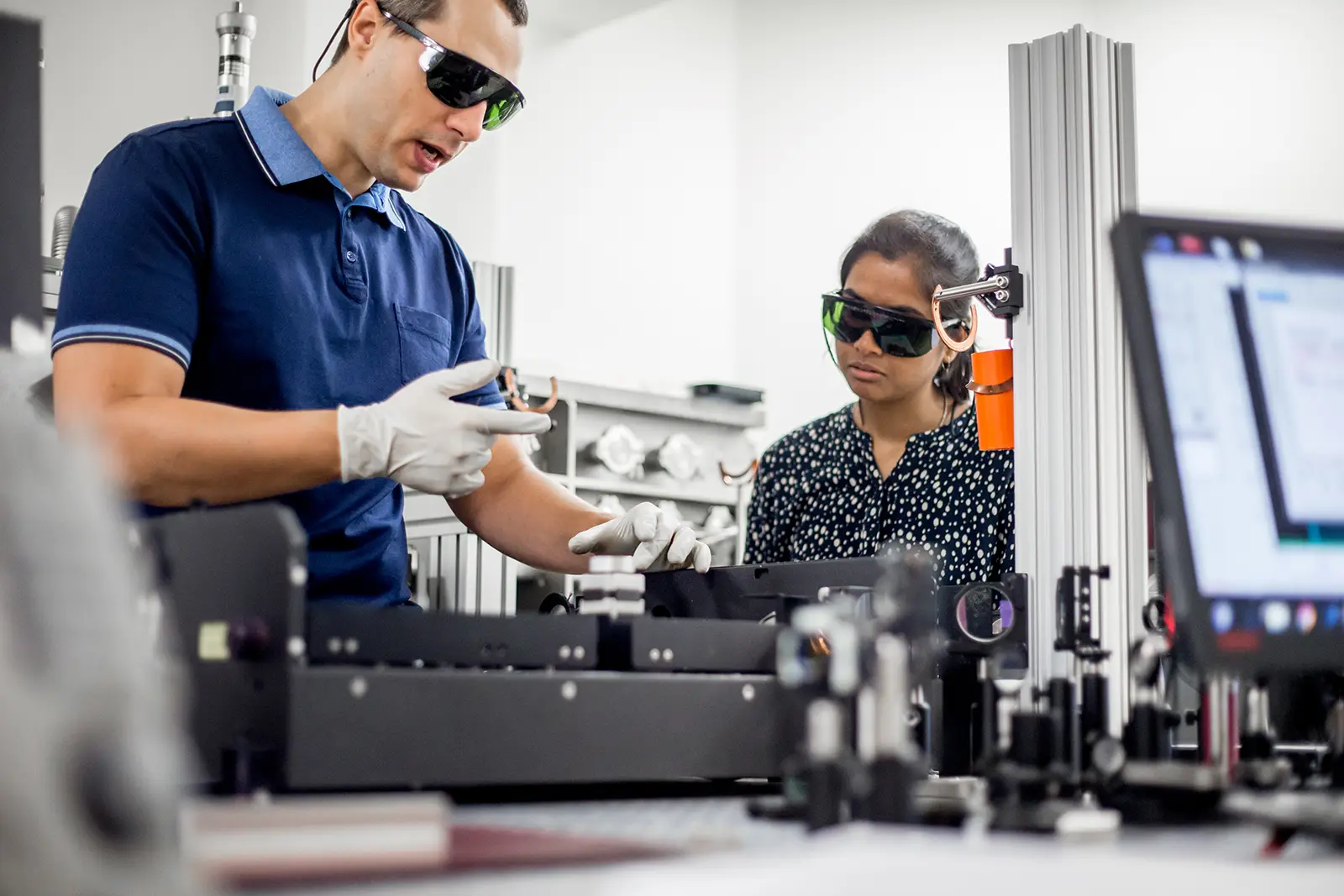
Female scientist discussing with male colleague while working in a lab

Impact Areas

A ripple effect: the broad impact of ODRD funding on NOAA and beyond

The ORAU Directed Research and Development (ODRD) program invests in research collaboration between ORAU researchers and university faculty at ORAU consortium member institutions. Learn how NOAA has been impacted in recent projects.
Read the news feature

A ripple effect: the broad impact of ODRD funding on NOAA and beyond

‘3D-printed’ human tissue may hold answers to health impacts of diagnostic low-dose radiation exposures

‘3D-printed’ human tissue may hold answers to health impacts of diagnostic low-dose radiation exposuresHow do doctors and scientists assess the health risks of diagnostic low dose radiation exposures such as X-rays? Up until recently, it was a challenging task due to the lack of appropriate model systems that mimic tissue microenvironments. Adayabalam Balajee, Ph.D., director of ORISE’s Cytogenetic Biodosimetry Laboratory—which is part of the Radiation Emergency Assistance Center/Training Site (REAC/TS)—and his team are collaborating to develop three-dimensional human tissue.

Read more about this ODRD project

Adayabalam Balajee, Ph.D., director of the ORISE Cytogenetic Biodosimetry Laboratory