
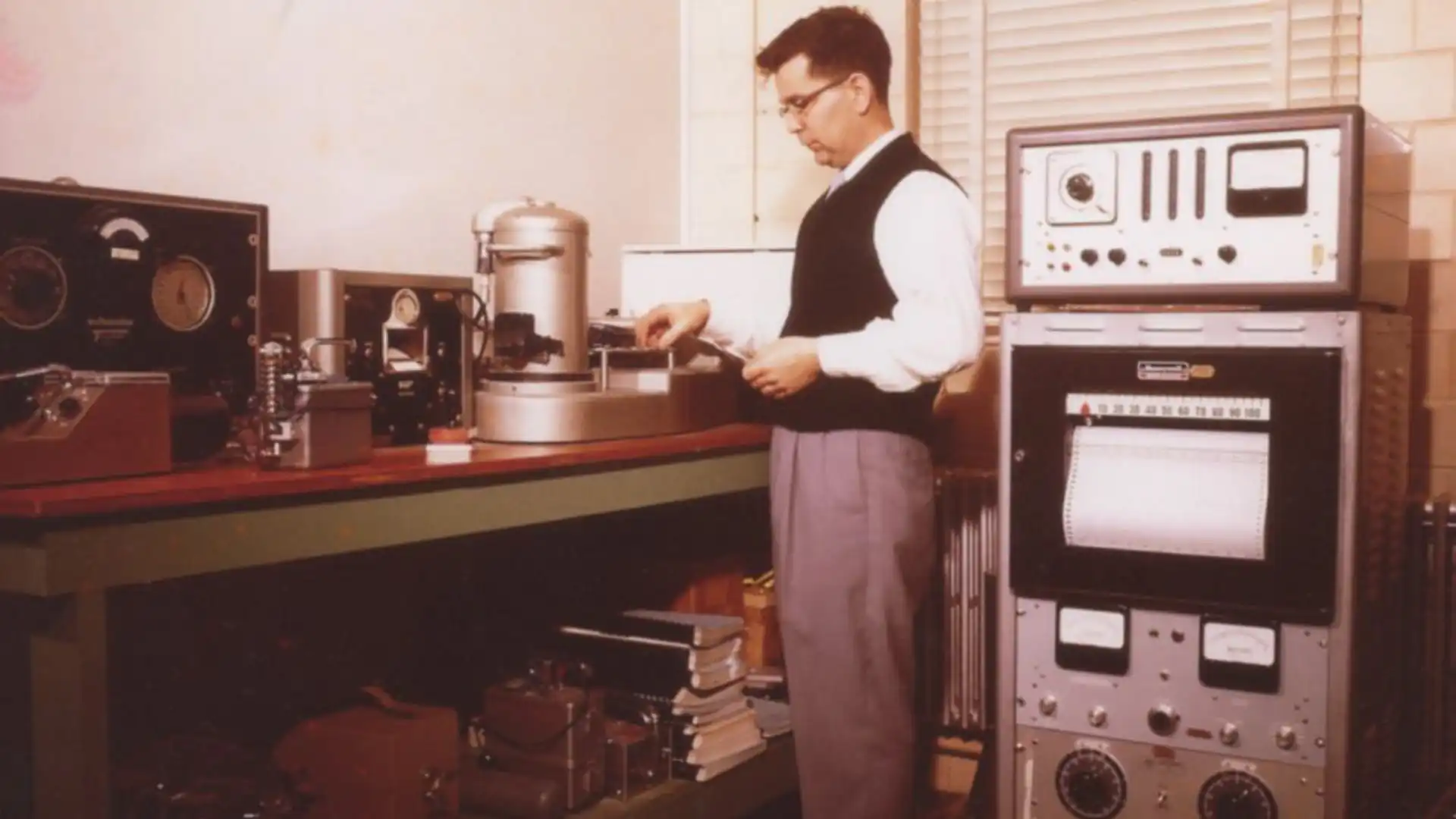
“Well, there’s a saying: ‘It was the best of times,’” retired ORAU health physicist Roger Cloutier recalled with a smile during an oral history interview, reflecting on his long career in radiation protection.
He meant it.
Cloutier entered the field just as radiation science was accelerating at an extraordinary pace. Over the course of his 33 years at ORAU, he led programs in health physics, medical physics and environmental sciences, helping shape the profession during a period of rapid scientific and regulatory growth.
“I came along just as this whole business was getting started,” he said. “[The Atomic Energy Commission] was spending lots of money to get work done. It was an opportunity to meet a lot of young researchers and so on. It was a great time to be in the business.”
Early years and service
Born in 1930 into a middle-class family in North Attleboro, Massachusetts, Cloutier was one of 13 children. He liked to joke that because he was “toward the end of the line,” at least he didn’t have to share a bed.
He was in junior high school when World War II began. As men in his community left for military service, jobs not typically open to teenagers became available. Cloutier seized those opportunities, working everywhere from farms to shoe repair shops—early lessons in responsibility and adaptability.
Knowing the draft loomed after high school, he enlisted in the Navy in 1948. He served four years during the Korean War as a Radarman 2nd Class in Combat Information Center aboard the USS Toledo and USS Gainard.
After leaving the Navy, Cloutier enrolled at the University of Massachusetts to study physics. His education included an appointment at Brookhaven National Laboratory and a University of Rochester graduate school fellowship administered by the Oak Ridge Institute for Nuclear Studies (ORINS), which later became Oak Ridge Associated Universities (ORAU). This was his first connection to Oak Ridge and the institution that would later define his career.
Building a career—and a family
Cloutier married between his junior and senior years of college. He and his wife would go on to raise five children.
In late 1956, Cloutier accepted a position in industrial hygiene and health physics near Pittsburgh, Penn. Industrial hygiene focuses on anticipating and controlling workplace hazards; health physics specializes in radiation protection. It was a natural fit for his physics background and growing interest in radiation science.
Soon afterward, a position opened at ORINS. The opportunity intrigued him. Oak Ridge offered professional promise—and, he hoped, a good place to raise a young family.
Though he had concerns because the region was grappling with desegregation tensions, including unrest in nearby Clinton, Tenn., it was the unexpected challenge of dialect confusion that caught him off guard.
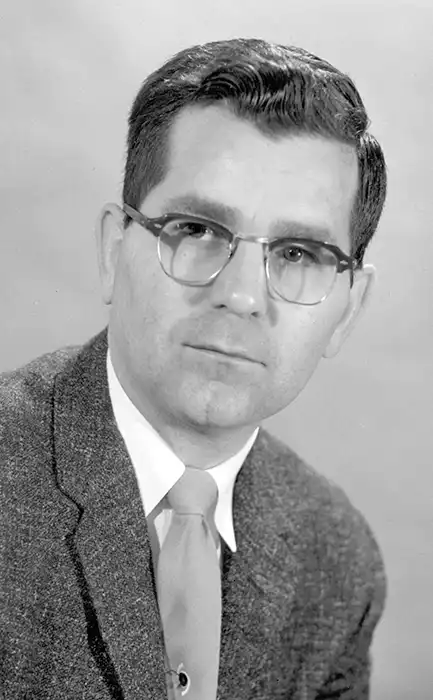
Roger Cloutier began his 33-year ORAU career in 1959.
“I came down to Oak Ridge to be interviewed, and I was assigned somebody to take me all over town,” Cloutier remembered. “The young lady who took me around town would say something, and I couldn’t understand her because she spoke with a Southern drawl that was predominant then. I would say something and she couldn’t understand me because I spoke with the Boston drawl. So, as we spent the whole day together going from place to place, we hardly communicated at all because we couldn’t really talk to each other and understand.”
Even so, Roger Cloutier couldn’t shake his curiosity. It was 1959, and just a year earlier there had been a criticality accident at the Y-12 nuclear facility in Oak Ridge. When workers were handling liquid uranium, too much of it collected in the wrong way and it briefly started an uncontrolled nuclear reaction. Eight men received significant radiation doses. No one died, but some experienced radiation sickness symptoms. ORINS had managed the care of the people who were exposed, and Cloutier wanted to join the health physicists who were on the front lines of this new frontier.
Despite what Cloutier had read in the news about race tensions in the area, he said he decided Oak Ridge may still be a better place to raise his family than Pittsburgh, so they made the move. He quickly found the city vibrant and community oriented. “There were lots of things going on in town. The communities, the smallest communities, like Elm Grove and East Village and so on, had stores and so you went to [the] neighborhood store. But there was always something going on. I can think of going to things at the library, which was opposite the Alexander Inn. There was always something going on in the hall next to it and so on. So, it was a fun city,” he said.
Because he was passionate about supporting civil rights, he also used the opportunity of moving to the South to get involved in the movement. Cloutier served as president of the Oak Ridge Community Relations Council and as a member of the Tennessee Human Resources Council, helping lead efforts to desegregate local businesses. He proudly remembered visiting a barbershop on the day it opened its doors to everyone.
Advancing Radiation Science
Professionally, Cloutier immersed himself in nearly every corner of ORINS.
Early on, he worked with founder William Pollard, Ph.D., to develop radiation safety programs. He collaborated closely with the Special Training Division, teaching physicians and other professionals the science of dosimetry—measuring radiation absorbed by the body. His work took him across the United States and internationally, including training programs throughout Central and South America.
When Marshall Brucer, M.D., introduced a cobalt-60 therapy machine to treat tumors, Cloutier helped establish its safety framework. As nuclear medicine emerged as a new field, he stood at the forefront.
From here, Cloutier worked on another important project for the ORINS Medical Division. Thinking through the science of radiotherapy and how the department’s Medium Exposure Rate Total Body Irradiator (METBI) worked, he and a colleague had another idea. The METBI was used to treat patients with blood disorders because such people typically responded well to whole body irradiation.
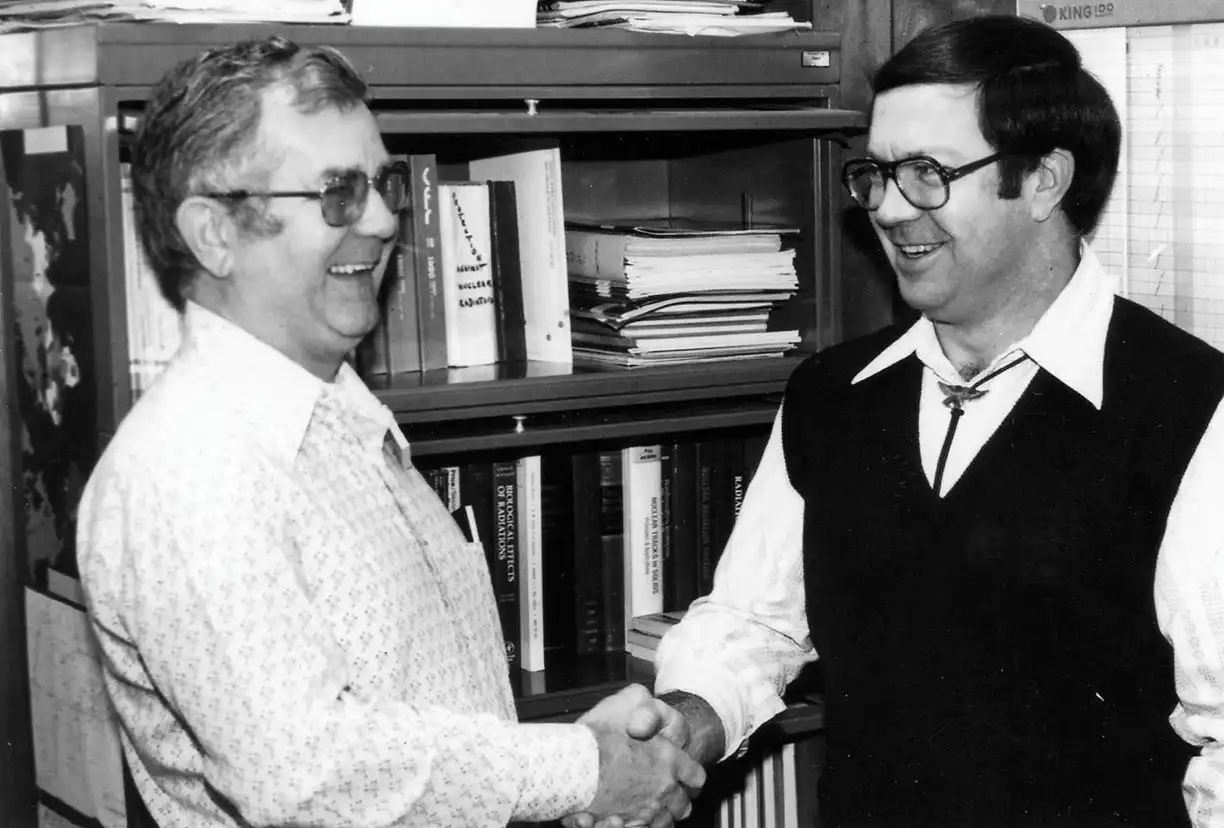
Roger Cloutier (left) shakes hands with Jack Beck, who helped design the LETBI facility.
“We designed the LETBI facility, which is Low Exposure Rate Total Body Irradiator, which was actually a – what amounted to a Holiday Inn room sitting in the middle of a large, shielded place, which a patient would move in and live there for up to a week leaving only to go to the bathroom. So, we were involved with the dosimetry involved with patients that were being radiated,” Cloutier explained. “So, the idea was that it would be constant low-level radiation. The argument is a simple one that the rate at which you administer the radiation changes the outcome, and low exposure was thought that it was going to allow larger doses to be given but spread out and therefore would affect the blood disorder more.”
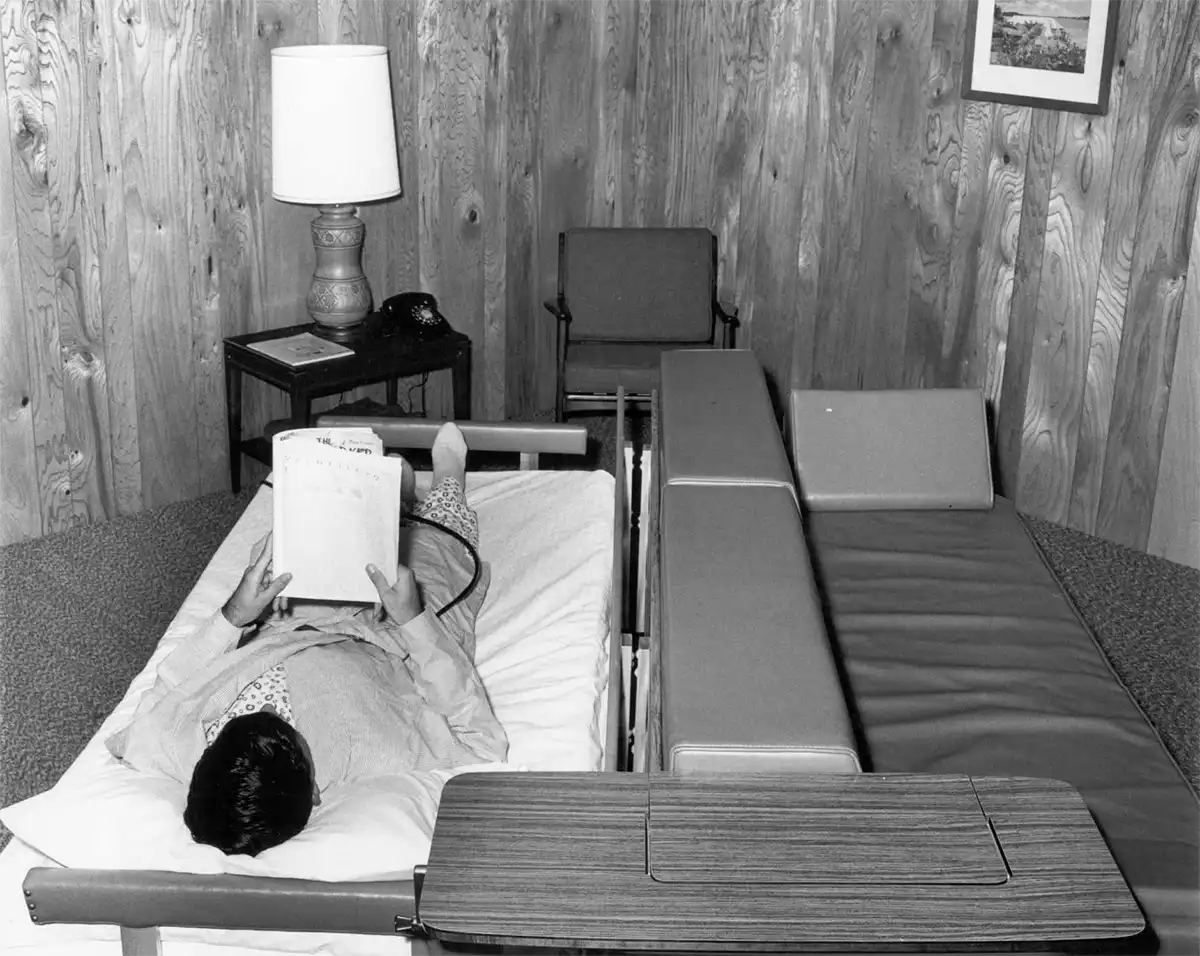
Patients received radiation treatments while staying in the LETBI facility at the ORINS Medical Division.
Establishing the Radiation Internal Dose Information Center
In the late 1960s, as nuclear medicine and nuclear energy use expanded, concern grew about internal radiation exposure—from medical procedures, industry and environmental releases.
Recognized as one of the dosimetry trailblazers, the Atomic Energy Commission (now known as the Department of Energy) and the Food and Drug Administration (FDA) asked Cloutier to establish the Radiation Internal Dose Information Center (RIDIC). So, he did.
This was significant. The RIDIC collected, analyzed and distributed data on how radioactive materials behave inside the human body. At a critical moment in nuclear science, it centralized expertise and improved models for calculating internal radiation dose. The center provided technical guidance to researchers, health professionals and regulators nationwide.
Cloutier considered his role in building the RIDIC a “great fortune.”
Environmental stewardship and mentorship
Later in his career, Cloutier turned his attention to environmental verification surveys. As federal agencies evaluated Department of Energy sites, previously undisclosed mercury and uranium contamination from Manhattan Project and Cold War operations came to light at Y-12. Serving as radiation and chemical safety officer for ORAU, Cloutier helped measure and assess those impacts.
Just as important to him was mentorship. He trained his protégé Evelyn Watson—who worked with him on several projects including RIDIC and would eventually succeed him—ensuring the next generation was prepared to lead. Investing in young professionals was one of his greatest sources of pride. Read Evelyn Watson’s amazing story in this blog.
A lasting legacy
In his 33 years with ORAU, Cloutier served in numerous leadership roles, ultimately retiring as director of the Professional Training Program, which continues to provide accredited education in radiation safety and health physics today.
He authored more than 70 publications, served as president of the Health Physics Society in the early 1980s, sat on many nonprofit boards, organized the ORAU retirees’ group and received professional honors, including the Loevinger-Berman Award.
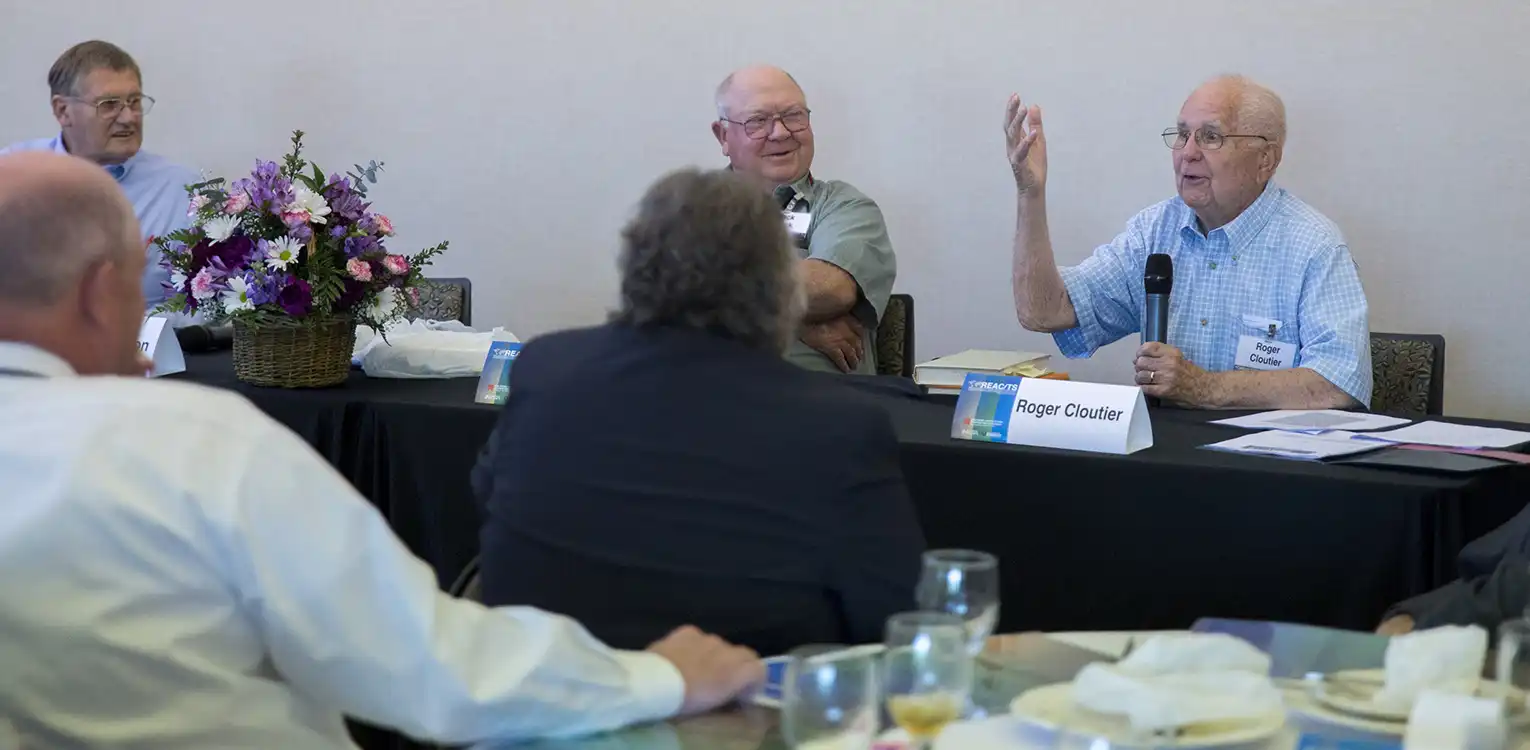
Roger Cloutier speaks during the Radiation Emergency Assistance/Training Site 40th anniversary event in 2016.
Yet those who knew him often speak first not of his accolades but of his character.
“With a ready wit and ever-present twinkle in his eye,” his obituary reads, “he would probe, inquire, suggest, cajole, question and question again without ever belittling the beliefs of his companion. He was interested in everyone’s opinion no matter what their background. Even in his final days, he was quizzing his care givers on the engineering principles of the medical equipment he had around him.”
Curious to the end.
He entered radiation science at its dawn and helped guide it into maturity. In laboratories, classrooms, communities and regulatory arenas, this scientist left his mark.
Roger Cloutier, you were a gift.
Sources:
Cloutier, Roger - COROH - ORPL Digital Collections
Obituary information for Roger Joseph Cloutier